
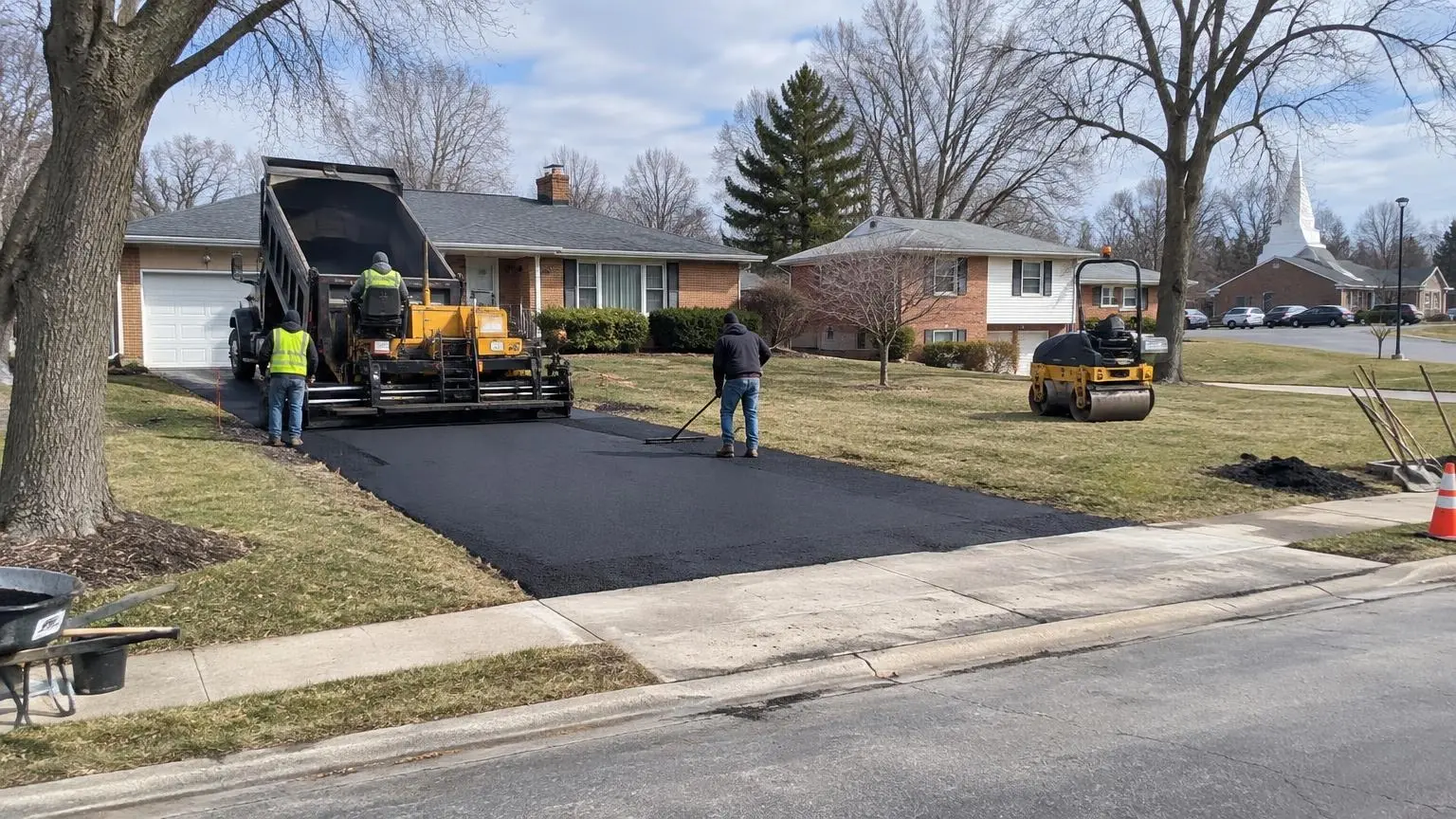
Protect what you paved
Sealcoating in Kettering, OH
A sealcoat every few years keeps asphalt from drying out and letting water in.
- Free estimates at your home or lot
- Proposal lists base, thickness and apron work line by line
- City right-of-way rules explained before you sign
What a Sealcoat Is For
Sealcoating protects the binder in asphalt from sun, air, water and chemicals. Over time, an unsealed driveway fades from black to gray, the surface gets rough and small stones start to come loose. In the Dayton area, winter salt and meltwater add to that wear. A sealcoat slows it all down and keeps the surface tight. It does not fill real cracks or fix a weak base, so it goes on after any repairs.
Timing
HomeGuide recommends letting new asphalt cure 3 to 6 months before sealing, and resealing every 2 to 10 years depending on the product and conditions. Sealer needs dry pavement and air temperatures between about 50 and 95 degrees, and HomeGuide lists 12 to 72 hours before driving. Around Kettering, that means late spring through early fall.
Preparation
- Blow and sweep the surface, and scrape out grass along the edges
- Prime oil and fluid stains so the sealer bonds
- Fill or seal cracks so the coat is not just bridging over them
- Seal the joint at the concrete apron and garage
- Mask the apron, walks and garage slab so sealer stays on the asphalt
Application
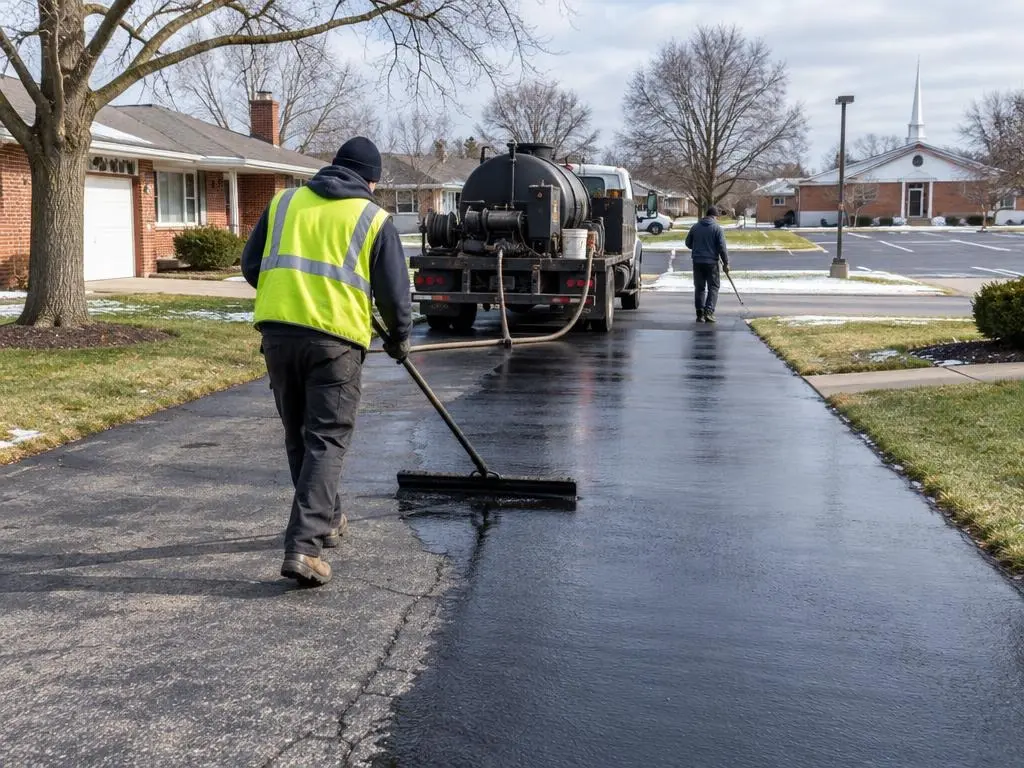
We hand-edge borders, apply an even coat across the field, and block off the driveway until it has cured. You can usually walk on it within a few hours.
Sealer types
HomeGuide describes two common types: coal tar sealer, which resists gas and oil stains but has been restricted in many areas over health and environmental concerns, and asphalt-based emulsion, considered more environmentally friendly but more prone to staining. We explain what we use and why.
Lots
HomeAdvisor's parking lot guide puts lot sealcoating at roughly 15 to 30 cents a square foot. Lots are sealed in sections or after hours, and lines are repainted once the sealer cures.
Signs your drive is due
- The surface has turned from black to light gray
- Rain soaks in instead of beading
- Fine sand collects in the tire paths
- Small stones are loosening near the edges
Any two of those mean a sealcoat will do some good, as long as the cracks are taken care of first.
Shade and trees
Driveways under big maples and oaks, common on older Kettering streets, stay damp longer after rain and collect leaves and sap. They need a warm, breezy day for sealer to dry and a careful cleaning first, since sealer will not bond to organic film.
What sealing does not do
It does not level low spots, fill wide cracks, fix potholes or strengthen a weak base. If those problems are present, they get repaired first, and sometimes the honest answer is that a sealcoat would be wasted money.
Sealing a lot versus a driveway
On a driveway, the whole surface is usually done in one visit and the owner parks on the street for a day. On a business lot, we seal in sections, starting with the areas that can be closed most easily, and leave an entrance open. Once the last section cures, lines are repainted so stalls, arrows and accessible spaces are crisp again.
What Sealcoating Includes
Most of the job is preparation.
Cleaning and edging
Debris and grass removed so the coat bonds.
Stain priming
Oil spots treated before sealing.
Crack and joint sealing
Cracks and the apron seam closed first.
Even coat and cure
Borders cut by hand, field coated, drive closed until dry.
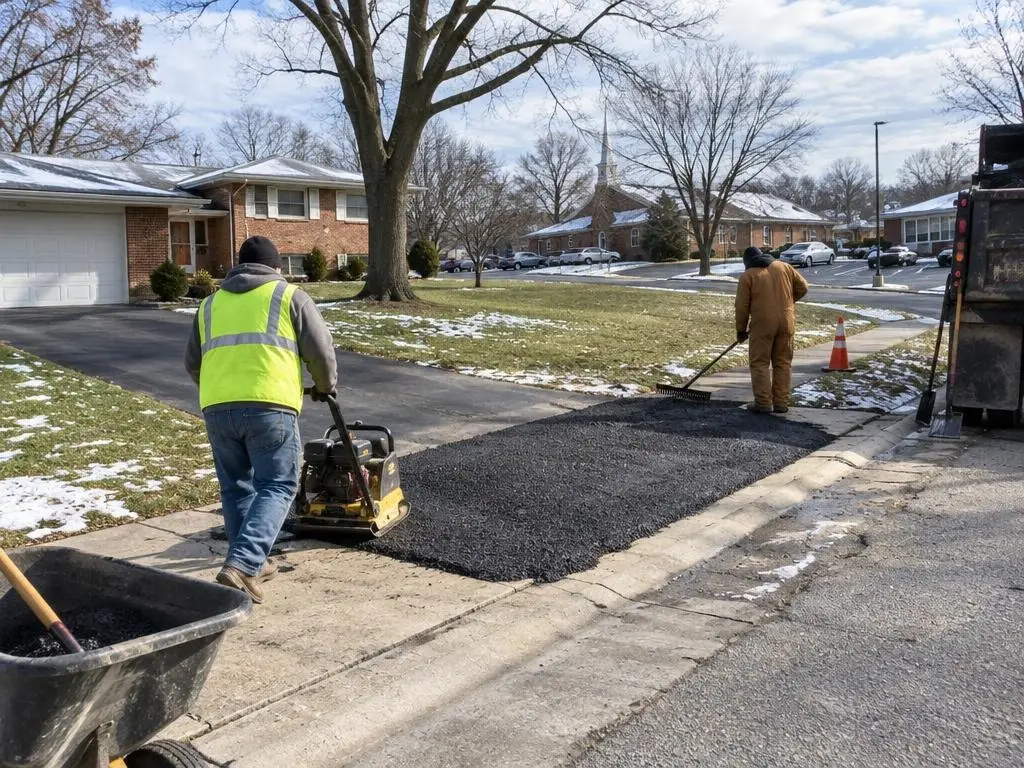
Typical Sealcoating Costs
| Item | National figure |
|---|---|
| Driveway sealing (HomeGuide) | $1 to $2 per sq ft |
| 12 x 24 ft, one-car (HomeGuide) | $290 to $580 |
| 20 x 20 ft, two-car (HomeGuide) | $400 to $800 |
| Average job (HomeGuide) | About $600 |
| Parking lot sealing (HomeAdvisor) | $0.15 to $0.30 per sq ft |
National figures. Crack prep, stains and minimum charges affect the total. The number on your signed proposal is what you pay.
How It Works
1. Look and measure
Surface, cracks and stains checked.
2. Book a dry day
Scheduled for weather between about 50 and 95 degrees.
3. Prep
Clean, prime, fill cracks, mask concrete.
4. Seal
Coat applied, drive closed, reopening time given.
Sealcoating Questions
How often should I sealcoat?
Every few years is typical; HomeGuide gives a range of 2 to 10 years.
Will sealer get on my concrete apron?
We mask the apron, walks and garage slab to keep sealer on the asphalt.
Can sealcoating fix cracks?
No. Cracks are filled or sealed first; the coat protects the surface.
How soon can I drive on it?
HomeGuide lists 12 to 72 hours depending on weather and shade.
Sealcoating Service Areas
- Asphalt Paving in Kettering, OH
- Asphalt Paving in Oakwood, OH
- Asphalt Paving in Centerville, OH
- Asphalt Paving in Washington Township, OH
- Asphalt Paving in Beavercreek, OH
- Asphalt Paving in Bellbrook, OH
- Asphalt Paving in Sugarcreek Township, OH
- Asphalt Paving in Moraine, OH
- Asphalt Paving in West Carrollton, OH
- Asphalt Paving in Miamisburg, OH
- Asphalt Paving in Miami Township, OH
- Asphalt Paving in Springboro, OH
- Asphalt Paving in Dayton, OH
- Asphalt Paving in Huber Heights, OH
- Asphalt Paving in Fairborn, OH
- Asphalt Paving in Xenia, OH
- Asphalt Paving in Riverside, OH
- Asphalt Paving in Vandalia, OH
- Asphalt Paving in Trotwood, OH
- Asphalt Paving in Franklin, OH